.
.
The April workshop has sold out. Please get on the waitlist to be alerted about the next workshop.
4-day immersive course | 15–18 April | Mangaroa Farms, Upper Hutt
Limited to 20 participants | Experiential-first | Highly practical for classrooms and staffrooms
What this is
A nature-based professional learning workshop for principals, SLT, educators and kaiako. This course builds the nervous-system regulation insights and skills needed to lead through classroom pressure without burning out. During the four days participants will learn the theory of neuroscience as it relates to connection, but more importantly they will practice and embody it through pragmatic workshopping that can be brought back to your staffrooms and classrooms to share with your school.
This is not sit-and-get PD. It is balanced and practical: short teaching inputs, lots of embodied practice, scenario work, facilitation reps, and integration planning so the tools actually show up in real classrooms and staffrooms.
Teachers spend a great deal of energy either behind a screen or dealing with dysregulated youth / staff. This workshop helps you regrow the roots of your nervous system into solid earth and equips you with tools that help you stay grounded amid the chaos.

Why Now?
Schools are being asked to lift consistency, implementation, and behaviour support, even as staff overload is rising. When adults are dysregulated, strategy collapses. This course strengthens the adult capacity that makes classroom practice and culture change stick, while reducing the risk of burnout and protecting retention.
Why 4 days? - One day of brain-only training can turn to vapour. Our 4-day program is immersive and somatic, helping you embody the skills so they stay with you and can be brought back effectively to your school.
Outcomes for schools
Participants leave with a portable kete they can use immediately:
- Nature as a classroom regulation ally
- Flexible and pragmatic nature journaling skills that hold science, numeracy and literacy at all grade levels.
- Research-based ecotherapy toolkit for using even a small patch of grass as a grounding tool for classroom live wires.
- During long lunch breaks a chance to learn safe foraging and homesteading craft skills as a bonus.
- Practical Neuroscience:
- somatic / nature-based regulation skills so that you can
- reduce nervous system overload and recover faster after and during classroom incidents.
- recognise triggers and protective patterns in self and others, and return to choice
- Non-violent communication and resonant communication skills so that you can:
- de-escalate conflict without shame, threat, or power struggles.
- Understand the impact of attachment style on triggers and behaviour.
- strengthen relational safety and repair after rupture
- support staff sustainability and retention
- somatic / nature-based regulation skills so that you can
What is NVC?
NVC (Nonviolent Communication) is a practical framework for communicating clearly without blame or moral judgment. It turns conflict into information and collaboration by focusing on:
- What is happening (observation)
- What we are feeling
- What we need
- What we are requesting (clear, doable next step)
In schools, this becomes a powerful de-escalation and repair tool that preserves dignity while maintaining firm boundaries.
The human brain changes in response to the quality of language it hears. Words can trigger defence, or they can build integration.
We will be teaching a style of communication that:
1. Names inner experience rather than judging behaviour.
Instead of “You overreacted,” it becomes, “When that happened, something inside you felt alarmed.”
The shift is from criticism to curiosity.
2. It assumes protective intelligence.
Every reaction is understood as an adaptation. Rather than asking “What’s wrong with you?” the implicit stance is “What happened that made this response necessary?”
3. It builds neural integration.
When feelings and needs are named accurately and compassionately, the right hemisphere relaxes. The prefrontal cortex comes back online. Shame softens. Coherence increases.
4. It reduces shame by restoring dignity.
Shame fragments the self. Resonant language restores wholeness by reflecting back the humanity inside the behaviour.
5. It is slow and relational.
It is not a technique to win arguments. It is a practice of connection. Tone matters. Pace matters. Attunement matters.
At its heart, you will learn about creating internal and external safety. It allows people to metabolise emotion instead of suppressing it or discharging it onto others.
The 4-day arc
Day 1: Basecamp, nature attunement and regulation
Build reliable state-shift skills using the environment as a co-regulator. Learn fast, portable tools for grounding, orienting, sensory tracking, rhythm, breath, and movement that work in real time. And learn a creative research-based tool that uses the environment to teach numeracy, literacy and science.
Day 2: Theory in practice, tools that work under pressure
NVC, Resonant Language, Embodied Creativity framework, and applied neuroscience and polyvagal concepts translated into pragmatic classroom and leadership moves. Language for boundaries, de-escalation, and repair that holds when it is hot.
Day 3: Triggers, blocks, and burnout prevention/recovery
Identify personal and workplace triggers that interrupt regulation. Work with protective patterns, stress cycling, and post-incident recovery. Practical strategies to prevent overload from accumulating into burnout.
Day 4: Integration, embedding skills into school life
Stitch the kete into personal and school-relevant protocols. Facilitation reps, implementation planning, and an integration pathway for classroom practice, staff support, and leadership culture.
Who it’s for
- Principals
- SLT
- Deans
- SENCOs
- Teachers
- Kaiāwhina
- ECE teachers
- Learning support staff
who want usable tools for challenging classrooms, staff wellbeing, and sustainable school culture.
Your Facilitators

Anna Strycharz-Banas (PhD, CNVC CT)
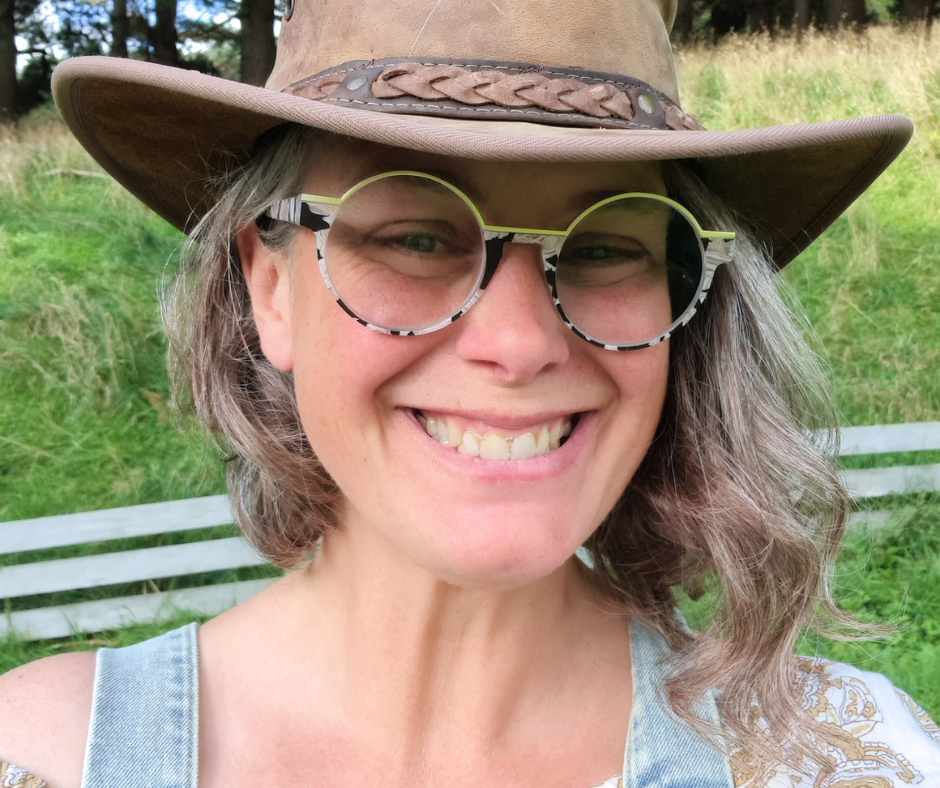
Mandi Lynn (PGCertSCL, MNZIPP)
TEDx Speaker, Regenerative Educator, Creative Somatic Ecotherapist, Needs-Based Coach, Rights of Passage Facilitator. Multi Award Winning Filmmaker and Master Photographer, Founder - Every Body is a Treasure Trust and Natural Leaders. Project Lead and Kaiko - Earth School Aotearoa at Mangaroa Farms.
What’s included
- 4 days of immersive training at Mangaroa Farms
- Experiential learning with practical take-home kete
- Integration planning to embed tools back at school
- Breakfast, lunch, dinner, and morning and afternoon teas are included with the residential ticket.
- Lunch, morning, and afternoon teas are included with the sleep-at-home tickets.
- Bonus foraging and homesteading crafting opportunities during the long lunch breaks.
Investment (all prices include GST)
Non Subsidised - Accommodation option - $1,460
Non Subsidised - Non-housed option $1060
Please see subsidised options for specific regions below
Practical details
Dates: 15–18 April
Location: Mangaroa Farms, Upper Hutt
Group size: Limited to 21 for safety, depth, and practice time
Daily hours: 9:15 - 6pm with an hour and a half for lunch daily.
Questions?
Please call Anna with any questions - 02108583114 or email her on hanu.banas@gmail.com
Regional Subsidised Course Fees
We are offering a limited number of supported places for educators from the communities we serve. These places are provided by reducing the participation fee and covering programme costs through our organisational funding. No funds are paid directly to individuals. This is supported by Community Organisation Grant Funding and by the Christine Taylor Foundation in the following regions.

We sold out for our first workshop, but we would love to have you put your details down, and we will let you know when we host the next one.